What is Brachytherapy?
July 21, 2022 Cancer Hub 639 ViewsWhat is the meaning of Brachytherapy?
Brachytherapy is a type of radiation therapy performed to treat cancer. Brachytherapy is a type of internal radiation therapy in which ribbons, seeds, or capsules containing a radiation source are placed in the body. Brachytherapy allows doctors to deliver high doses of radiation to specific areas of the body. It has fewer side effects and has a shorter treatment time than external beam radiation, which projects radiation from a machine outside the body.
In this article, we will be discussing in detail brachytherapy.
- How does Brachytherapy work?
- What is the purpose of Brachytherapy?
- What are the types of Brachytherapy?
- What is the diagnostic procedure before Brachytherapy?
- How to prepare for Brachytherapy?
- How is the procedure of Brachytherapy performed?
- How to care after Brachytherapy?
- What are the risks of Brachytherapy?
- What is the cost of Brachytherapy in India?
How does Brachytherapy work?
- Radioactive materials are implanted inside or adjacent to the tumor.
- These radioactive materials emit a prescribed radiation dose.
- Radiation damages or destroys the genetic makeup of cancer cells.
- The damaged cancer cells cannot grow and multiply, and ultimately die.
What is the purpose of Brachytherapy?
Brachytherapy is performed in the following cases:
- To treat many types of cancers
- Before surgery to shrink the size of the tumor
- After surgical treatment to destroy any remaining cancer cells
- In conjunction with other types of treatments to treat cancer, like chemotherapy, external beam radiation, immunotherapy
Brachytherapy can help in treating many types of cancers like:
- Breast cancer
- Brain cancer ( Know more about- What is Brain Cancer Treatment ? )
- Bile duct cancer
- Cervical cancer
- Endometrial cancer
- Eye cancer
- Esophageal cancer
- Lung cancer
- Head and neck cancers
- Prostate cancer ( Know more about- What is Prostate Cancer Treatment ? )
- Pancreatic cancer
- Skin cancer
- Rectal cancer
- Vaginal cancer
- Soft tissue cancers
What are the types of Brachytherapy?
Brachytherapy implants can be temporary or permanent. While the temporary implants are removed once the treatment ends, the permanent implants stay in the body permanently. The different types of brachytherapy implants include:
- Low-dose rate (LDR) implants: These implants will emit low doses of radiation for one to seven days. These implants may be removed after treatment, or stay in their place permanently.
- High-dose rate (HDR) implants: These implants emit high doses of radiation for 10 to 20 minutes. The implant is then removed. Treatment may vary depending on the type of cancer being treated and the condition of the patient. Treatment can be performed twice a day for five days to once a week for five weeks.
- Permanent implants: These types of radioactive implants keep emitting radiation until there is no radiation left in them. The seeds or implants, which are the size of a rice grain, stay in the body. This type of treatment is also known as seed implantation.
What is the diagnostic procedure before Brachytherapy?
- Physical examination: The doctor will evaluate your physical health and check your symptoms and medical history.
- Imaging tests: Imaging tests such as CT scans and MRI scans may be performed to get clear images of the cancerous organ.
- Endoscopy: The procedure involves using a tube having a camera on one end to check an organ internally. ( Know more about- What is Endoscopy? )
- Blood tests: Underlying medical disorders that could be present are diagnosed using blood tests.
- Biopsy: It involves the surgical excision of the suspected tissue growth and then sending it to the laboratory for evaluation under the microscope to check if cancer cells are present and which type of cancer cells are present.
How to prepare for Brachytherapy?
- Tell the doctor if you have any medical illnesses.
- Tell the doctor if you are taking any medications, herbs, or supplements.
- If you have any allergies, inform the doctor about the same.
- Stop smoking as soon as you can.
- The doctor may recommend stopping blood-thinning medications like warfarin and aspirin a few days before the procedure.
- A bowel preparation (enema) may be recommended before the procedure.
- The doctor may advise you to not eat or drink anything for eight hours before going to the hospital.
How is the procedure of Brachytherapy performed?
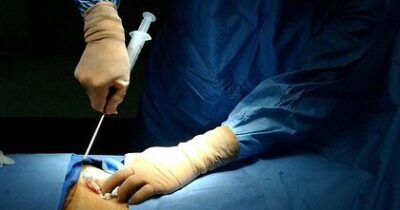
Most types of brachytherapy are put in their place by a catheter, which is a small, stretchy tube. Sometimes, brachytherapy may be put in its place through a larger device known as an applicator. The catheter or applicator is placed into the patient’s body before treatment is started.
The different techniques that could be used to place brachytherapy are:
- Interstitial brachytherapy: The radiation source is placed within the tumor in this technique, such as within the prostate or breast.
- Intracavitary brachytherapy: The radiation source in this type of procedure is placed within a body cavity or a cavity that is created by surgery, such as the vagina or windpipe.
- Episcleral brachytherapy: In this type of procedure, the radiation source is attached to the eye. This technique is used for treating melanoma of the eye.
After placing the catheter or applicator in its place, the radiation source is then placed inside it. The radiation source may be kept in its place for a couple of minutes, for several days, or for the rest of the patient’s life depending on the type of radiation source used, type of cancer present, location of cancer, the health status of the patient, and the other forms of cancer treatments that the patient has had. (Know more about- What is Bone Marrow Transplant? )
How to care after Brachytherapy?
- After brachytherapy, the radiation source in the body may give off radiation for some time. You will need to take some safety measures after brachytherapy, which may include:
- Staying in a private hospital room and protecting other people from radiation that comes from your body.
- Hospital visits by other people to be completely avoided or done only after wearing protective gear and at a safe distance.
- Not having any contact with pregnant women or young children.
- After the completion of treatment using LDR or HDR implants, the catheter is removed.
- The doctor will give you pain-relieving medications before the removal of the catheter or applicator.
- It is normal for you to have some tenderness for a few months in the area of the catheter or applicator placement.
- Once the catheter or applicator is removed, there is no radiation in your body and it is safe for other people to be near you.
- After catheter removal, you may need to limit your daily activities for a week or two.
- Follow-up visits and scans are recommended by the doctor to see if the treatment was successful.
What are the risks of Brachytherapy?
The complications associated with brachytherapy vary depending on the type of treatment performed and cancer that is being treated. Some of the common side effects include:
- Fatigue
- Urinary incontinence (involuntary leakage of urine)
- Difficulty in urination
- Erectile dysfunction ( Know more about- What is Erectile Dysfunction ? )
- Loss of hair
- Bowel incontinence (involuntary passage of stools)
- Constipation ( Know more about- What is Constipation ? )
- Diarrhea
- Mouth ulcers
- Headaches
- Nausea
- Vomiting
- Cough
- Shortness of breath (dyspnea)
What is the cost of Brachytherapy in India?
The total cost of brachytherapy in India can range from around INR 3,00,000 to INR 4,00,000. However, many prominent hospital doctors in India specialize in brachytherapy. But the cost varies across different hospitals.
If you are coming from abroad, apart from the cost of brachytherapy, there will be an additional cost of living in a hotel and the cost of local travel. So, all the expenses come to a total of INR 3,90,000 to INR 5,20,000.
We hope that we could answer all your questions regarding brachytherapy through this article.
If you need more information about brachytherapy, you can contact a Radiation Oncologist.

We only aim to provide you with information through this article. We do not recommend any medication or treatment to anyone. Only a qualified doctor can give you good advice and the correct treatment plan.