 X
X
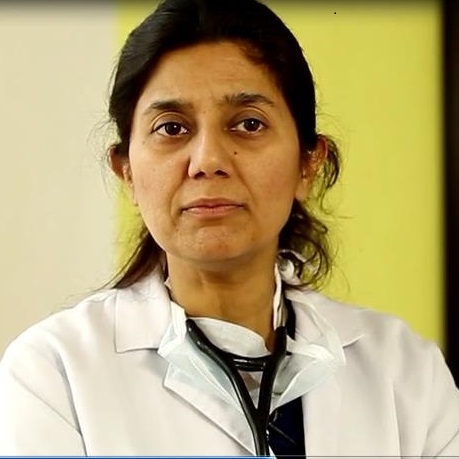
DR APARNA JASWAL
Cardiologist
- Fees: INR 1,000
-
Friday 10:00 AM - 2:00 PM
(See all timing)Monday 10:00 AM - 2:00 PM,
Wednesday 10:00 AM - 2:00 PM,
Friday 10:00 AM - 2:00 PM
Introduction
Dr. Aparna Jaswal is one of the best acknowledged expert in Cardiology at Fortis Escorts Heart Institute, New Delhi and has an experience of over 11 years in this field. Dr Jaswal has to her credit ‘Certified Cardiac Device Specialist’ from the HRS, USA. Dr Jaswal has many research projects and has been actively participating in National and International Research Trials. Dr. Aparna Jaswal has been invited as a faculty to various national and international symposia and workshops. Dr. Aparna Jaswalal has to her credit for having been the first electrophysiologist to start an EP program in Mauritius in November 2010.
Hospital Associations
Fortis Escorts Heart Institute And Research Centre Okhla Road
Services/Interest
- Electrophysiology
- Three Dimensional Mapping
- Implantation of Pacemakers
- ICDs
- CRT
- CRT D
Experience
Dr. Aparna Jaswal is one of the best Cardiologists in New Delhi and has an experience of over 11 years in this field. She did her Observation training at Aurora Sinai medical centre, St. Luke Medical Centre, University of Wisconsin Milwaukee, USA under the supervision of Dr. Masoood Akhtar and Dr. J. Sra-2006.
Professional Memberships
Cardiological Society Of India. Fellow of the Heart Rhythm Society, USA. Fellow Of American College Of Cardiology, USA. Heart Rhythm Society- IBHRE World Ambassador.
Awards and Recognitions
Achieved Distinction in Biochemistry, Pharmacology, ENT in MBBS Examination. Recipient of Pinnamineni Venkateswara Rao Gold Medal. Best out-going student for the year 1992-93 in Andhra Pradesh University of Health Sciences. Awardee of Dr. Wazir Gold Medal. Best student for the year. Diplomate of National Board 2003. Distinguished Service Award. Indian Medical Association - Academy of Medical Sciences 2007-08. Outstanding Achievements Felicitation. Indian Council for Human Relations. International Women's Day 2010. Prof DP Basu Memorial Award CSI 2014.
Education
MBBS (Gold Medalist), MD (General Medicine), DNB (Cardiology) (Gold Medalist), FHRS, CCDS, FACC, FESC, Certified Cardiac Device Specialist, Fellow of the heart Rhythm Society (USA).
I Speak
English, Hindi
Feedback For Dr Aparna Jaswal
Write FeedbackFortis Escorts Heart Institute And Research Centre Okhla Road Timing
Monday
10:00 AM - 2:00 PM
Wednesday
10:00 AM - 2:00 PM
Friday
10:00 AM - 2:00 PM
Who is a cardiologist?
A cardiologist is a trained medical professional with special training and skill in finding, treating and preventing diseases of the heart and blood vessels, which is the cardiovascular system.
Cardiology is a complex field, so cardiologists specialize in different areas. All cardiologists are clinical cardiologists as they focus on the diagnosis, medical management, and prevention of cardiovascular disease. Some clinical cardiologists specialize in pediatric cardiology, so they also diagnose and treat heart problems in children. An adult cardiologist is the clinical cardiologists who treat only adult patients. Other clinical cardiologists who specialize in interventional procedures like angiography, angioplasty, stenting, and TAVI are called the interventional cardiologist.
Why should I see a cardiologist?
With statistics like heart disease being among the number one killers, there is no reason for anyone to not to be worried. General cardiologists are practitioners that focus on the heart, so If you are at risk for heart disease, a routine check-up with a cardiologist can help you to be on top of your heart health.
And in case you are wondering how to be sure that you are at risk for heart disease, then you can look at the certain common symptoms shown by your body that usually point to heart disease. Whenever you feel chest pain that is radiating towards the left side or to the back of your body, you should immediately consult an experienced cardiologist. You should also consult a heart doctor when you experience severe pressure in the chest, shortness of breath while walking and continues while you are at rest, Irregular heartbeats leading to palpitations, sudden clenching pain in jaws, or when you undergo excessive sweating continuously for a long period of time without any exercise.
What kind of tests do cardiologists do?
Cardiologists perform the following tests:
- Cardiac CT scan,
- Magnetic resonance angiography (MRA) of the heart,
- Electrocardiogram (ECG),
- Stress test (also called treadmill or exercise ECG),
- Echocardiogram,
- Magnetic resonance imaging (MRI) of the heart,
- Cardiac catheterization,
- Electrophysiology study,
- Tilt table test,
- Loop Recorder,
- Transesophageal echocardiogram (TEE),
- Positron emission tomography (PET) scan, etc.
How often should you get your heart checked?
You should get your heart checked as often as possible, and this is especially true when your family has a risk for heart disease. You should get your blood pressure checked every year, and according to the American Heart Association, the screening tests for coronary artery disease should begin at age 20, cholesterol test at age of 25, and blood glucose screening should begin at age 45.
Is there a difference between a cardiologist and a cardiac surgeon?
Cardiologists are doctors who specialize in cardiovascular disease and are able to treat conditions ranging from severe hypertension to elevated cholesterol to heart rhythm problems. Cardiologists also are able to perform procedures that both help diagnose and treat many cardiac conditions, for example, cardiologists can perform stress tests to uncover coronary disease, conduct echocardiograms to diagnose holes in the heart or other issues with heart valves; they may even order monitoring of the heart to uncover rhythm issues like atrial fibrillation. In addition, to treat these specific problems, specialized cardiologists like Interventional cardiologists can close small holes in the heart, place stents in clogged arteries, and place specialized devices in the heart. Cardiac surgeons come from a very different background and are usually the general surgeons who chose to further specialize as cardiac surgeons and limit their practice to the heart arteries and heart valves.
Do you see a cardiologist for high blood pressure?
If you test on the high side for blood pressure and yet your regular doctor says you're blood pressure is controllable, you could still benefit from seeing a preventive cardiologist. Preventive cardiologists are a special type of clinical cardiologists whose goal is to prevent cardiovascular diseases and to reduce the burden of them in populations and improve the quality of life and life expectancy in individuals with such diseases.
What happens in a cardiologist appointment?
In your first cardiologist appointment, you are usually greeted by a member of the nursing staff who measures your weight and height in order to calculate your body mass
(BMI). At this stage, you are normally asked to go for one of the following tests:
- Electrocardiography (ECG) which is a tracing of the heart carried out by attaching leads
- Echocardiograph (ECHO), a scan of the heart.
- Both of these tests are simple and painless.