 X
X
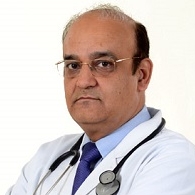
DR NEERAJ BHALLA
Cardiologist
Introduction
Dr. Neeraj Bhalla is one of the best Cardiologist in Delhi . Dr Neeraj Bhalla is a Graduate of Armed Forces Medical College (AFMC) at Pune.Dr. Neeraj Bhalla did his Post Graduation in Medicine from AFMC where Dr. Neeraj Bhalla won the KK Gupta Gold Medal for standing 1st in the Advanced Course.Dr. Neeraj Bhalla completed his DM in Cardiology from PGI Chandigarh and then was at leading Armed Forces hospitals at Bangalore and New Delhi.Dr. Neeraj Bhalla previous appointments include Director of Cardiology at Metro Hospitals Delhi and with Max Hospital as Senior Interventional Cardiologist. present appointment is Chairman Cardiology and Senior Consultant at The BLK Super Specialty Hospital at Pusa Road, New Delhi. Dr. Neeraj Bhalla has successfully carried out over 10000 Coronary Angioplasties and is adept in the use of various devices such as Rotablator, Intra vascular Ultrasound and Distal protection devices used in advanced interventional procedures.Dr. Neeraj Bhalla has a vast experience in Interventions in the coronary as well as non coronary circulations. Dr. Neeraj Bhalla has presented his work at various forums both nationally and internationally Dr. Neeraj Bhalla has been invited as Faculty in various national and international meetings.Dr. Neeraj Bhalla has been a Professor of Medicine at Rajiv Gandhi University of Health Sciences , Bangalore and has been a DNB (Cardiology) teacher.Dr. Neeraj Bhalla is a gifted speaker and has conducted numerous CME programmes for professionals and delivered many talks to the public. Dr Bhalla is elected for the prestigious Fellowship of American College of Cardiology(FACC)
Hospital Associations
BLK Super Speciality Hospital .
Services/Interest
- Cardiologist
- Interventional Cardiologist
- Pediatric Cardiologist
Experience
Dr. Neeraj Bhalla is one of the best Cardiologist in Delhi having 32 years of experience.
Professional Memberships
Fellow Society of Cardiovascular Angiography/ Intervention , Fellow Endovascular Society of India , Member Cardiological Society of India ,Member SPAF Academy.
Awards and Recognitions
KK Gupta Gold medal for standing First in Medicine, Commendation by Chief of Air staff (CAS), Govt. of India.
Education
MBBS , MD ,DM.
I Speak
English , Hindi
Feedback For Dr Neeraj Bhalla
Write FeedbackWho is a cardiologist?
A cardiologist is a trained medical professional with special training and skill in finding, treating and preventing diseases of the heart and blood vessels, which is the cardiovascular system.
Cardiology is a complex field, so cardiologists specialize in different areas. All cardiologists are clinical cardiologists as they focus on the diagnosis, medical management, and prevention of cardiovascular disease. Some clinical cardiologists specialize in pediatric cardiology, so they also diagnose and treat heart problems in children. An adult cardiologist is the clinical cardiologists who treat only adult patients. Other clinical cardiologists who specialize in interventional procedures like angiography, angioplasty, stenting, and TAVI are called the interventional cardiologist.
Why should I see a cardiologist?
With statistics like heart disease being among the number one killers, there is no reason for anyone to not to be worried. General cardiologists are practitioners that focus on the heart, so If you are at risk for heart disease, a routine check-up with a cardiologist can help you to be on top of your heart health.
And in case you are wondering how to be sure that you are at risk for heart disease, then you can look at the certain common symptoms shown by your body that usually point to heart disease. Whenever you feel chest pain that is radiating towards the left side or to the back of your body, you should immediately consult an experienced cardiologist. You should also consult a heart doctor when you experience severe pressure in the chest, shortness of breath while walking and continues while you are at rest, Irregular heartbeats leading to palpitations, sudden clenching pain in jaws, or when you undergo excessive sweating continuously for a long period of time without any exercise.
What kind of tests do cardiologists do?
Cardiologists perform the following tests:
- Cardiac CT scan,
- Magnetic resonance angiography (MRA) of the heart,
- Electrocardiogram (ECG),
- Stress test (also called treadmill or exercise ECG),
- Echocardiogram,
- Magnetic resonance imaging (MRI) of the heart,
- Cardiac catheterization,
- Electrophysiology study,
- Tilt table test,
- Loop Recorder,
- Transesophageal echocardiogram (TEE),
- Positron emission tomography (PET) scan, etc.
How often should you get your heart checked?
You should get your heart checked as often as possible, and this is especially true when your family has a risk for heart disease. You should get your blood pressure checked every year, and according to the American Heart Association, the screening tests for coronary artery disease should begin at age 20, cholesterol test at age of 25, and blood glucose screening should begin at age 45.
Is there a difference between a cardiologist and a cardiac surgeon?
Cardiologists are doctors who specialize in cardiovascular disease and are able to treat conditions ranging from severe hypertension to elevated cholesterol to heart rhythm problems. Cardiologists also are able to perform procedures that both help diagnose and treat many cardiac conditions, for example, cardiologists can perform stress tests to uncover coronary disease, conduct echocardiograms to diagnose holes in the heart or other issues with heart valves; they may even order monitoring of the heart to uncover rhythm issues like atrial fibrillation. In addition, to treat these specific problems, specialized cardiologists like Interventional cardiologists can close small holes in the heart, place stents in clogged arteries, and place specialized devices in the heart. Cardiac surgeons come from a very different background and are usually the general surgeons who chose to further specialize as cardiac surgeons and limit their practice to the heart arteries and heart valves.
Do you see a cardiologist for high blood pressure?
If you test on the high side for blood pressure and yet your regular doctor says you're blood pressure is controllable, you could still benefit from seeing a preventive cardiologist. Preventive cardiologists are a special type of clinical cardiologists whose goal is to prevent cardiovascular diseases and to reduce the burden of them in populations and improve the quality of life and life expectancy in individuals with such diseases.
What happens in a cardiologist appointment?
In your first cardiologist appointment, you are usually greeted by a member of the nursing staff who measures your weight and height in order to calculate your body mass
(BMI). At this stage, you are normally asked to go for one of the following tests:
- Electrocardiography (ECG) which is a tracing of the heart carried out by attaching leads
- Echocardiograph (ECHO), a scan of the heart.
- Both of these tests are simple and painless.