 X
X
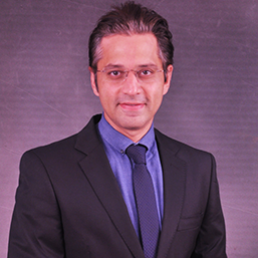
DR MUDIT KHANNA
Orthopedic Surgeon
- Fees: INR 2,500
-
Thursday 11:00 AM - 2:00 PM
(See all timing)Monday 11:00 AM - 2:00 PM,
Tuesday 11:00 AM - 2:00 PM,
Wednesday 11:00 AM - 2:00 PM,
Thursday 11:00 AM - 2:00 PM,
Friday 11:00 AM - 2:00 PM
Introduction
Dr. Mudit Khanna graduated from the Prestigious King George Medical College from where he completed both his M.B.B.S. and M.S. in Orthopaedic Surgery. Most of his higher surgical training in Orthopaedic Surgery has centredaround gaining expertise in the field of joint replacement surgery in centres of great repute within the United Kingdom and in other reputed centres across Europe, United States of America and Australia. While pursuing his higher surgical training in the field of Orthopaedic Surgery in the United Kingdom for a period of five years in various capacities, Dr. Mudit Khanna completed his M.R.C.S. from Royal College of Surgeons of Edinburgh, U.K. and M.Ch. in Orthopaedic Surgery from University of Dundee, Scotland, UK. Dr. Mudit Khanna has worked as a Senior Clinical Fellow at the prestigious Queen Elizabeth Hospital, UK and was awarded the Asia Pacific Zimmer Fellowship, which he pursued at the renowned Cleveland Clinic, Ohio, USA. Dr. Mudit Khanna has an expertise at performing all forms of primary and revision joint replacement cases and is a trusted name at handling complex sports related injuries requiring arthroscopic treatment.
Hospital Associations
Wockhardt Hospital, South Mumbai- New Age
Services/Interest
- Arthroplasty (Joint replacement surgery)
- Hip replacement surgery
- Hip resurfacing surgery
- Unicondylar (Partial) knee replacement surgery
- Shoulder replacement surgery
- Arthroscopy (Key-hole surgery)
- Meniscal tears and ligament reconstructions
- Shoulder arthroscopy
- Sports related shoulder injuries
Professional Memberships
-Royal College of Surgeons of Edinburgh, U.K.(Member). -Indian Orthopaedic Association (Member). -Indian Orthopaedic Society, UK (Member).
I Speak
English, Hindi
Total Knee Replacement
Knee pain and arthritis and stiffness is treated with a variety of methods. This includes medications, physical therapy and exercises, weight loss methods and surgery to replace the worn out cushions between the joint spaces.
It is when all other medications and therapies fail that patient may consider a Total Knee Replacement or TKR. This involves replacement of the worn out joint with artificial prosthetic joint.
This operation is usually performed under general anesthesia wherein patient will be rendered unconscious during the operative procedure. This operation can also be done under spinal or epidural anesthesia. A cuff like tourniquet is placed on the thighs just before the incision. When inflated this aids in reducing the blood flow to the operative site and reduces the risk of bleeding.
There are basically two approaches to a TKR :
- One is the classical method
- Another is the newly developed Minimally Invasive Surgery (MIS)
Procedure of classical approach to TKR:
- In classical TKR an eight to twelve inch incision is made in the front or side of the knee.
- The muscles are cut open and the joint cavity is exposed.
- The damaged parts of the joint including the lower part of the femur, upper part of the tibia are removed or sawed off.
- The prosthesis or the artificial joint is a metallic or plastic replica of the lower part of the thigh bone and upper part of the tibia.
- The new implants are sealed on the sawed off edges with the help of bone cement.
- Some implants are uncemented. These can be set over the edges of the sawed off bones in a press fit system.
- Prosthetic cartilage is placed between the prosthetic ends of the femur and tibia.
Procedure of minimally invasive TKR surgery:
- Minimally invasive surgery as the name suggests involves a smaller incision of three to five inches.
- Here the surgeon works the implant through a smaller opening.
- This leads to less pain and more rapid recovery.
- TKR is a very successful surgery and with proper accompanying physical therapy it can provide much relief. This mimics the original joint and allows a free movement of the joint. Benefits of this operation are remarkable in terms of freedom from pain, improved range of movement of the knees, improved sleep and better quality of living.
Total Hip Replacement
Total Hip Replacement (THR) is necessary when none of the other methods to correct a damaged hip is effective. In this operation the surgeon replaces the ball and the socket with metallic replacements and the cartilage with artificial joint material. Usually THR is done under general anesthesia, it can be also performed under spinal or epidural anesthesia where the anesthetic medicine is injected into a space between the vertebrae in order to numb the legs during the operation without making one lose consciousness.
- During the operation an incision will be made on the affected hip joint and the affected portions of the hip bone and the femur will be sawed off.
- The new prosthetic parts will be attached to the bone with the use of bone cement. Once both the ball and the socket are in placed the damage cartilage is also replaced between the prosthetics. A test motion is usually done to check the proper placement of the prosthetics.
- You may need a blood transfusion at this stage if you have lost a lot of blood during the operation. A drain may be put to drain off the excess fluids from the operative site.
- The muscles and skin are then sutured back using sutures or staples. The wound is bandaged.
After the surgery you will be transferred to the bed with a splint to hold the joint in place and avoid immediate movement. You will have to stay in bed with a wedge shaped cushion to keep the hip joint in alignment. Fluids, pain relievers and antibiotics may be given intravenously for a day or two before you can start on a normal diet and take the medications orally.
Early physiotherapy ensures early mobility and rapid recovery. Within a day or two you will be encouraged to walk with the help of crutches, walker or a cane. You may be released from the hospital in a few days to a week.
The benefits offered by this operation are remarkable in terms of reduction of pain and thus improvement of sleep, improvement of range of motion, physical capabilities and quality of life.
Feedback For Dr Mudit Khanna
Write FeedbackWockhardt South Mumbai - New Age Timing
Monday - Friday
11:00 AM - 2:00 PM
Who is an orthopedic surgeon?
An orthopedic surgeon is a practitioner dedicated to the examination, operation, prevention, and rehabilitation of injuries, disorders, and illnesses of the body's musculoskeletal system.
What does an orthopedic surgeon do?
An orthopedic surgeon is a doctor who is trained in the examination, operation, prevention and rehabilitation of disorders, injuries and illnesses of the musculoskeletal system of the body. The musculoskeletal system includes bones, nerves, joints, ligaments, muscles, and tendons.
Their responsibilities involve:
- Diagnosis of injury or disorder
- Treatment with medication, casting, surgery, exercise, or other options
- Rehabilitation by suggesting exercises or physical therapy restore movement, strength, and function
- Prevention with information and treatment plans to prevent injury or slow the progression of the disease.
What are the surgeries performed by an orthopedic surgeon?
The most commonly performed orthopedic surgeries are:
- Bone Fusion. Like spinal fusions, it uses grafting to join fractured bones together.
- Debridement. It means the removal of dead tissues.
- Internal Fixation of Bones. It places pieces of bones together and holds them in place using pins, screws or plates so that they can heal.
- Joint Replacement surgeries. These surgeries replace an injured joint with a prosthetic and are among the most common orthopedic procedures. Common joint replacement operations include hip and knee replacement surgeries.
- Osteotomy. This operation is to help correct the deformity in the child so that the bone grows properly.
- Revision Joint Surgery. If an existing implant has failed, it may be required to remove it and insert a new one. Revision surgeries are often required when the patient received a poor implant or an older implant has decayed.
- Soft tissue repair. It focuses on torn ligaments or tendons.
- Spinal Fusion. It joins the vertebrae together to give more durability to the spine or to repair damage to the spine.
What are the diseases treated by an orthopedic surgeon?
Common orthopedic disorders treated by orthopedic surgeons are:
- Arthritis: Osteoarthritis, Rheumatoid Arthritis, and Treatment for Arthritis.
- Bursitis
- Elbow Pain and Problems; Cubital Tunnel Syndrome, Lateral Epicondylitis (Tennis Elbow), and Medial Epicondylitis (Golfer's or Baseball Elbow).
- Fibromyalgia
- Foot Pain and Problems
- Fractures
- Hip Fracture
- Low Back Pain
- Hand Pain and Problems: Carpal Tunnel Syndrome.
- Knee Pain and Problems: Ligament Injuries to the Knee and Torn Meniscus.
- Kyphosis
- Neck Pain and Problems
- Osteoporosis
- Paget's Disease of the Bone
- Scoliosis
- Shoulder Pain and Problems
- Soft-Tissue Injuries
Is an orthopedist the same as an orthopedic surgeon?
Orthopedic surgeons may be Medical Doctors or Doctors of Osteopathic Medicine who have completed a 5-year surgical residency centered about the treatment of musculoskeletal conditions, while orthopedists specialize in the analysis and treatment of almost all bone and joint disorders, such as spinal disorders.
What is the difference between an orthopedic surgeon and a rheumatologist?
Both a rheumatologist and orthopedist treat joint pain as part of their specialty, whether the pain is acute or chronic. The main difference and overlap between an orthopedist and a rheumatologist is that a rheumatologist is a medical specialist and an orthopedist is a surgical specialist.