 X
X
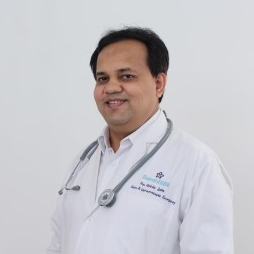
DR NITIN JAIN
Surgical Gastroenterologist
Introduction
Dr. Nitin A. Jain has done post graduation in general surgery from B. J. Medical College & Sassoon General Hospital, Pune. He has worked as an Assistant Professor in the Department of Surgery for 2 years in one of the top ten medical colleges in India. He has successfully completed 3.5 years of intensive training in Surgical Gastroenterology from Seth G.S. Medical College & KEM Hospital, Mumbai, which has the first state-of-art and dedicated GI surgery department in the state of Maharashtra. He is awarded a degree of Diplomate of National Board (DNB) in Surgical Gastroenterology/GI Surgery from National Board of Examinations, New Delhi.
Hospital Associations
SevenHills Hospital
Services/Interest
- Minimal invasive/laparoscopic surgeries
- Gastrointestinal liver
- pancreas-gall bladder & biliary
- Colorectal And Laparoscopic Surgery
Experience
He has done fellowship in Hepatobiliary Surgery from Sir Ganga Ram Hospital, New Delhi. He has worked as an Associate Consultant in GI & HPB Surgery in the PD Hinduja National Hospital & MRC Mumbai for one year and has special interest in gastrointestinal, liver-pancreas-gall bladder & biliary, colorectal and laparoscopic surgery. He is a fellow of Indian Association of Gastrointestinal Endoscopic Surgery and has expertise in minimal invasive/laparoscopic surgeries as well. He has vast experience and performed hundreds of inguinal hernias under local anesthesia. He has performed more than 1000 surgeries till date.
Education
MBBS - Sir Gangaram hospital, 2005. MS - General Surgery - Sir Gangaram Hospital., 2007. DNB ( General Surgery ) - Sir Gangaram Hospital., 2009.
I Speak
English, Hindi
Feedback For Dr Nitin Jain
Write FeedbackWho is a GI surgeon?
Surgical gastroenterologists or GI surgeons are the physicians who have extensive training in surgically treating of conditions that affect the large intestine, small intestine, stomach, esophagus, and biliary system which is made up of liver, pancreas, gallbladder, bile ducts.
What does a GI Surgeon do?
Gastrointestinal surgery is divided into two parts: Upper gastrointestinal surgeries and lower gastrointestinal surgeries. The GI surgeon surgically treats the diseases of the esophagus, stomach, small bowel, pancreas, liver, gall bladder, colon and surgery of the small intestine.
What diseases do GI surgeons treat?
A surgical gastroenterologist treats many conditions affecting the gut, such as achalasia, Barrett's esophagus, benign and malignant diseases of the biliary tract, benign and malignant diseases of the pancreas, gastrointestinal tumors, hiatal hernia, infectious diseases of the colon and rectum, inflammatory bowel disease and continent reconstruction, peptic ulcer disease, primary and metastatic liver tumors, primary neoplasms of the stomach, small bowel, colon, and rectum, radiation bowel injury and reflux esophagitis (or GERD) and its complications.
What surgeries do GI surgeons perform?
- GI surgeons perform procedures such as:
- Abdominal surgery
- Adrenalectomy
- Breast biopsy
- Colon resection
- Laparoscopic Adrenalectomy
- Laparoscopic Appendectomy and Open Appendectomy
- Laparoscopic Cholecystectomy
- Laparoscopic Colon Surgery
- Laparoscopic Nephrectomy
- Laparoscopic Nissen Fundoplication
- Laparoscopic Pancreatic Surgery
- Laparoscopic Splenectomy
- Multidisciplinary Treatment Approach
- Nissen fundoplication
- Roux en-Y
- Whipple
What separates a GI surgeon from a general surgeon?
A general surgeon practices broad surgical specialty comprising parotid gland, thyroid, breast, hernia, urinary tract, digestive tract, and trauma surgeries. He or she carries out a range of secondary level surgeries in these fields and knows and practices surgeries from several fields. A gastrointestinal surgeon is also called a GI surgeon or surgical gastroenterologist. His or her specialization focuses on everything that is involved with the digestive tract. Some of the complex gastrointestinal surgeries associated with spleen, liver, pancreas, and intestines including rectum are done by these experts.