 X
X
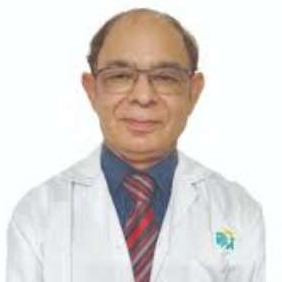
DR ATUL TANEJA
Dermatologist and Cosmetologist
- Fees: INR 1,600
-
Thursday 11:00 AM - 4:00 PM
(See all timing)Monday 11:00 AM - 4:00 PM,
Tuesday 11:00 AM - 4:00 PM,
Wednesday 11:00 AM - 4:00 PM,
Thursday 11:00 AM - 4:00 PM,
Friday 11:00 AM - 4:00 PM,
Saturday 11:00 AM - 4:00 PM
Introduction
Dr Atul Taneja is one of the best Dermatologist in Kolkata and is currently associated with Apollo Gleneagles Hospital Kolkata
Hospital Associations
Apollo Gleneagles Hospital Limited
Services/Interest
- Laser Surgery
- Photomedicine
- Skin Oncology
- Laser Resurfacing
- Acne / Pimples Treatment
- Photofacial
- Sun Spots Treatment
- Age Spots & Pigmented Lesions
- Wart Removal
- Peel & Polishing
- Lasers
- Anti Aging Treatment
- Scar Treatment
- Leucoderma Treatment
- Botox Injections
- Dental Fillings
- Dermaroller
Experience
Dr Atul Taneja is one of the best Dermatologist in Kolkata and has a total experience of 30 years.
Professional Memberships
American Academy of Dermatology (AAD), International Society of Dermatology, Indian Association of Dermatologists, Venereologists and Leprologists (IADVL), American Society of Laser Surgery and Medicine.
Awards and Recognitions
Completed many original research projects including: First complete project in the world to treat vitiligo (Leukoderma) with laser. First project in the world to treat scalp psoriasis with a fiber-optic device. First practical protocol in the world to treat psoriasis with laser. First project in the world to treat lichen planus with UVB light.
Education
Dr Atul Taneja has completed MBBS from University of Patna in year 1989. Dr Atul Taneja has completed MD from All India Institute of Medical Sciences, New Delhi in year 1994.
I Speak
English,Hindi,Bengali,Manipuri
Feedback For Dr Atul Taneja
Write FeedbackApollo Gleneagles Hospital Kolkata Timing
Monday - Friday
11:00 AM - 4:00 PM
Saturday
11:00 AM - 4:00 PM
Who is a dermatologist?
Dermatology is the branch of Internal Medicine concerned with the health of the skin, hair, and nails. Dermatologists are medical physicians with the highest training and expertise in this field, and they usually combine several activities like seeing patients in public hospital clinics and/or in private practices, teaching, acting as consultants to other specialists, and delving into clinical or basic research. Dermatologists must have expertise in basic sciences including pathology, microbiology, biochemistry, physics, endocrinology, and physiology. As skin diseases are often associated with internal conditions, they must be familiar with all the other medical specialties.
Do dermatologist treat skin cancer?
Yes, most forms of skin cancers such as basal and squamous cell cancers as well as pre-cancers are treated by dermatologists. If the cancer is more advanced and has spread to other parts of the body, you may be treated by another type of doctors, such as a surgical oncologist, medical oncologist or a radiation oncologist.
Do dermatologist performs surgery?
- Dermatologists perform skin surgery in many situations:
- To prevent or provide early control of disease, eg to remove skin cancer.
- To improve the skin's appearance by removing growths, discolorations, or damage caused by sunlight, aging, or disease.
- To perform a biopsy.
When should you visit a dermatologist?
You should visit a dermatologist when you spot a mole that has irregular borders or is changing its shape or size. Moles, freckles, or birthmarks are fairly common. But there is a serious possibility that they could alter over time. A change in a mole or growth on the body that’s itchy or bleeds or doesn’t heal on its own is usually the first sign of skin cancer.
You should visit your dermatologist when you’re losing more hair than usual or when you notice a bald spot. While it’s natural to lose a few hairs here and there, widening part, a growing bald spot, or significant shedding could be signs of something more serious.
You should visit your dermatologist have rough, scaly patches on your scalp, elbows, lower back, or knees. This condition is oftentimes psoriasis, which is caused by an autoimmune disorder where the immune system sends signals that tell skin cells to grow too quickly.
You have itchy, flaky skin that could be more than a seasonal side effect.
You should see a doctor if you have a painful, cystic pimple, which is the result of stress, hormonal fluctuations, and bacteria that is much harder to control.
What are the tests performed by a dermatologist?
- Patch testing:
- Biopsy:
- Punch
- Shave
- Wedge excision
- Scrapings:
It helps diagnose fungal infections and scabies.
- Examination by Wood light:
To distinguish hypopigmentation from depigmentation
To diagnose and define the extent of lesions
- Tzanck testing:
To diagnose viral diseases, such as herpes simplex and herpes zoster.
- Diascopy:
To decide whether erythema in a lesion is due to blood within superficial vessels.
Diascopy can also help identify sarcoid skin lesions.
What are the diseases treated by a dermatologist?
Acne, Bites, Benign Tumors, Bullous Diseases, Dermatitis, Drug Rash, Hair Diseases, Infections, Inherited Conditions, Papulosquamous, Pigment Disorders, Pre-Cancerous Lesions, Skin Cancer, Erythema Multiforme, Erythema Nodsum, Erythroderma, Granuloma Annulare, Hemangiomas, Hyperhidrosis (Excessive Sweating), Keloids, Keratosis Pilaris, Lichen Sclerosis et Atrophicus, Lichen Simplex Chronicus, Photodamage, Pityriasis Rosea, Scars, Spider Veins, Staphylococcal Scalded Skin, Stevens-Johnson Syndrome, Toxic Epidermal Necrolysis, Urticaria (hives), and Vasculitis, Wrinkles (fine and deep).