 X
X
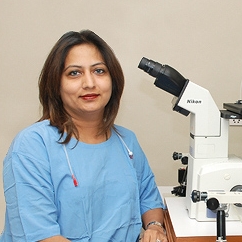
DR NANDITA PALSHETKAR
IVF/Assisted Reproduction
Introduction
Dr. Nandita Palshetkar is one of the pioneers of IVF Clinics In India specialising in Assistive Reproductive Technologies and has been instrumental in helping over 25,000 aspiring parents to have a baby of their own. Over the last 18 years, Dr Nandita Palshetkar is amongst the IVF Doctors in India who introduced pioneering medical technologies to assist childless couples. Some of them are IMSI (male infertility), assisted laser hatching, metabolomics and ovarian tissue freezing. Today, she runs five IVF centres across India. She is also the senior vice president of the Federation of Obstetrics and Gynaecological Societies of India (FOGSI), the largest body of gynaecologists in India with over 25000 members. The mayor of Mumbai has also lauded her for her achievements.
Hospital Associations
Lilavati Hospital and Research Centre
Services/Interest
- IVF
- Sperm Freezing
- IUI
- Laser Assisted Hatching
- ICSI
- Recurrent IVF Failure
- IMSI
- Ovulation Introduction
- GIFT
- Secondary Infertility
- PGD
- Surrogacy Services
- Egg Donation
- Embryo Donation
- Oocyte Cryopreservation
- Egg Freezing
Experience
Dr. Nandita Palshetkar has been instrumental in helping over 25,000 Indian and international couples to have children and become parents. In 2013, Dr Nandita Palshetkar's Bloom IVF Centres is awarded as "Best IVF Centre in India" by Frost & Sullivan, truly makes her one of the leading IVF Doctors in India.
Professional Memberships
MOGS - Mumbai Obstetrics & Gynaecological Society, IAGE - Indian Association of Gynaecological Endoscopist, ESHRE - European Society of Human Reproduction. ASRM - American Society for Reproductive medicine, IAHR, ICMR, ISAR, AFG.
Awards and Recognitions
Received an award (Navshakti Awards) at the event ‘Celebrating Womanhood’ (Jallosh Stree Tatvacha) to commemorate the International Women’s Day 2014. Received “Bharat Gaurav Award” 2014 at House of Commons, London. Recevied Dignitories of Maharashtra award in Mumbai on 30th April 2013. Received an Award for “Best Woman Achiever” in gynaecological field from the Mayor of Mumbai (Shraddha Jadhav) in 2010.
Education
MD in 1993 from Mumbai University. She was also awarded the FCPS in the same year from the College of Physicians and surgeons Mumbai. Subsequently she was awarded the ICOG from the MICOG Mumbai.
I Speak
English, Hindi and Marathi
Feedback For Dr Nandita Palshetkar
Write FeedbackWho is a fertility specialist?
A fertility specialist is a physician who practices a subspecialty of gynecology and obstetrics called reproductive endocrinology and infertility (REI). Fertility specialists focus on diagnosing, treating and preventing male and female infertility. These physicians have completed 4 years of medical school and at least 4 years of residency training in obstetrics/gynecology (OB/GYN) or urology (andrology).
Is a gynecologist a fertility specialist?
Fertility specialists are not just gynecologists. They are a reproductive endocrinologist and practice reproductive endocrinology and infertility (REI) which is the subspecialty of obstetrics and gynecology.
When should you visit a fertility specialist?
An average woman in her thirties has a 15% to 20% chance of getting pregnant in an average month. As women get older, their fertility begins to decline and so does their chance of getting pregnant in an average month, which is why is suggested that the patient should make the call before they’ve passed the threshold of 35.
How long should you wait to see a fertility specialist?
If you are under 35, you should see a fertility specialist after you have tried to conceive for 12 months. If you are 35 to 39, you should see a fertility specialist after you have tried to conceive for 6 months. If you are 40 or more, you should see a fertility specialist after you have tried to conceive for 3 months.
What mean the treatment methods used by a fertility specialist?
- Fallopian tube surgery
- Endometriosis, fibroids, and PCOS
- Laparoscopy.
- Epididymis surgery
- Assisted conception methods like Intrauterine insemination (IUI) and In vitro fertilization (IVF)
What happens during your first appointment?
One of the initial things the fertility specialty will want to know is whether or not you're ovulating. At your first meeting with the doctor, he or she will go over your medical history and then outline the fertility tests you and your partner will need to have. For men, the basic test for infertility, semen analysis (SA), will be performed, in which a sample of ejaculate is evaluated in a lab.