 X
X
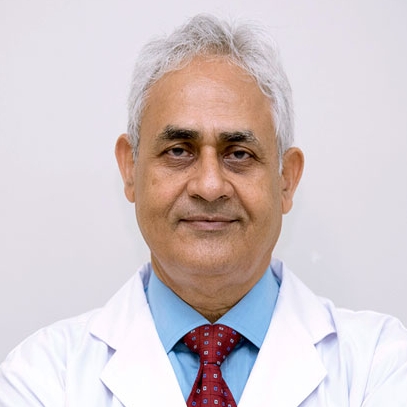
DR AKHILESHWAR JHA
Urologist
- Fees: INR 800
-
Thursday 10:00 AM - 2:00 PM
(See all timing)Monday 10:00 AM - 2:00 PM,
Tuesday 10:00 AM - 2:00 PM,
Wednesday 4:00 PM - 6:30 PM,
Thursday 10:00 AM - 2:00 PM,
Friday 10:00 AM - 2:00 PM
Introduction
Dr. Akhileshwar Jha is a Senior Consultant at UPHI Surgical Centre, Gurgaon.Dr. Akhileshwar Jha has special and current interests in Prostate Surgery, Kidney Stone, Ureter Stone and Bladder Stone Surgery, Paediatric and Neonatal Urology, Cancer Surgery, Endoscopic Urology, Laser Surgery, Trauma, female Gynaecological Urology, Andrology and male infertility and impotence.
Hospital Associations
UPHI GURGAON
Services/Interest
- KTP Greenlight Laser Photoselective Vaporisation of BPH (UK & USA Cert.)
- Bladder Cancer Surgery
- Endoscopic Urology (Adult and Paediatric)
- Renal Cancer Surgery
- Holmium Laser Applied to Urology
- Andrology
- Trauma Surgery (Urology
- Urological Trauma in Gynaecological Surgery)
- Paediatric Urology (Comprehensive)
- Hypospaedius Repairs
- Gynaecological Urology (V.V.F. repair)
Experience
Senior Consultant at UPHI Surgical Centre, Gurgaon,Senior Consultant Urologist, Doctors Hub, DLF Phase IV Gurugram,Senior Consultant Urologist, Umkal Hospital, IFFCO Metro Station, Gurugram,Visiting Senior Consultant Urologist, VPS Rockland Hospital, Manesar and New Delhi -Qutab,Head of Urology and Renal Sciences & Senior Consultant Urologist, Rockland Hospital, IMT Manesar, Gurgaon India and Qutab, New Delhi (Feb 2015 – Aug 2017),Consultant Urologist, King Fahd Central Hospital, Gizan, Saudi Arabia (Aug 1986- Nov 2014),Experience in the United Kingdom and USA from 1992-2006,National Health Service, UK from 1977 – 1986,Urological Registrar. Dumfries and Galloway Royal Infirmary, Scotland, UK from 10.1985 –7.1986,Urological Registrar. Victoria Hospital, Kirkcaldy, Scotland, UK 4.1983 –10.1985,Teaching Hospital Posts at the Edinburgh/Dumfries/Kirkcaldy: May 1980 – Apr 1983. Experience in India- Guest speaker, Platinum Jubilee Celebrations of Patna Medical College in Feb 2000,All training at Patna Medical College Hospital, India with brief period at L.N.M. Institute of Surgical Emergencies, Patna, India from July 1972 – Jan1977,S.O., L.N.M. Institute, Patna, India from Aug 1976 – Jan 1977,Postgraduate Trainee, (M.S. General Surgery) from Aug 1974 – Aug 1976,Resident Junior House Officer / Senior House Officer (General Surgery) from Jul 1973 – Jul 1974,Pre-registration Resident House Officer (General Surgery, Medicine, Pediatrics, Rural Health) from Jul 1972 – Jul 1973.
Professional Memberships
Full member, General Medical Council, UK,Full member, Indian Medical Council, India,Member, Societe Internationale D’Urologie (SIU),Ex-Full Member and Post-graduate Trainer, Saudi Council for Health Speciality,Ex-Member, Asir and Gizan Urology Club,Life Member, Association of Surgeons of India,Member, Indian Medical Association,Ex-Full member, Saudi Urological Association.
Education
Prince Of Wales Medical College, Patna, India,Royal College of Surgeons (Edinburgh), Scotland, United Kingdom,Green light Laser Training and Certification, London, UK & USA.
I Speak
English,Hindi.
Feedback For Dr Akhileshwar Jha
Write FeedbackUPHI Hospital Timing
Monday
10:00 AM - 2:00 PM
Tuesday
10:00 AM - 2:00 PM
Wednesday
4:00 PM - 6:30 PM
Thursday
10:00 AM - 2:00 PM
Friday
10:00 AM - 2:00 PM
Who is a urologist?
A urologist is a physician who diagnoses and treats diseases of the urinary tract in both men and women.
Urologists diagnose and treat diseases of the urinary tract, the system that creates, stores, and removes urine from the body, in both men and women. Urologists also diagnose and treat anything involving the male reproductive tract. Some urologists treat general diseases of the urinary tract while others specialize in a particular type of urology. They gain additional skills in a specialty area by doing one to two year of additional training called fellowship. Depending on the specialty, they are categorized as:
- Female Urologist who focuses on the conditions of a woman’s reproductive and urinary tract.
- Male Urologist who focuses on problems that prevent a man from conceiving a baby with his partner.
- Neurourologist who focuses on urinary problems due to conditions of the nervous system.
- Pediatric Urologist who focuses on urinary problems in children.
- Urologic Oncologist who focuses on cancers of the urinary system, including the kidneys, bladder, prostate, and testicles.
When should I see a urologist?
Normally, you wouldn’t know you have a problem in your urinary tract unless you are tested. But there are some symptoms you should never overlook as they could indicate a urological problem.
It has been recommended that you should see a specialist if you:
- Suffer from hematuria, which means you have blood in your urine
- Experience consistent pain or burning while urinating (urinary tract infection)
- Have a frequent need to urinate
- Have difficulty urinating
- Experience incontinence
- Have frequent urinary tract infection
- Have severe constipation
For men, you should visit a urologist, if you have:
- A problem with getting or keeping an erection
- Issues related to fertility
- A change in your prostate-specific antigen (PSA)
- An abnormal prostate exam
- A testicular mass or persistent pain.
- Prostate cancer.
For women, you should visit a urologist to get treatment for:
- Urinary incontinence
- Urinary tract infections
- Urinary fistula, Pelvic Organ Prolapse,
- Voiding dysfunction.
What diseases does a urologist treat?
A urologist can treat the following conditions:
- Recurrent urinary tract infections
- Urinary incontinence and overactive bladder
- Interstitial cystitis
- Prostatitis
- Enlarged prostate
- Kidney stones
- Male and female infertility
- Sexual dysfunction (male or female)
- Cancers throughout the urinary tract (such as kidney, prostate, bladder, penile, and testicular cancers)
What kind of tests do urologists perform?
The tests performed by urologists are:
- 24-Hour Urine Collection
- Antegrade Pyelogram
- Computed Tomography Scan of the Kidney
- Cystography
- Cystometry
- Cystoscopy for Women
- Kidney Biopsy
- Kidney Scan
- Kidney Ultrasound
- Kidney, Ureter, and Bladder X-ray
- Prostate/Rectal Ultrasound
- Renal Angiogram
- Renal Venogram
- Retrograde Cystography
- Retrograde Pyelogram
- Retroperitoneal Lymph Node Dissection
- Urine Flow Test
What happens in your first urologist appointment?
During the first appointment, most of the urologist try to learn all they can about their patient's medical history and the symptoms they are experiencing.
Patients' are usually asked to provide a urine sample, to fill out questionnaires that help the experts assess the nature the symptoms, give information on the medical histories of the patient's family members and provide a list of all current medications.
Urologists also perform a physical exam. The exam concentrates on the genitourinary system which includes the kidneys, adrenal glands, urinary bladder, urethra, and reproductive organs. Depending on the patient's symptoms, additional tests may also be performed to help the urologist make their evaluation.
What's the difference between a urologist and nephrologist?
When it comes to the difference between nephrology and urology, the former deals with only kidneys while the latter provides treatment for several other organs related to the urinary tract in both men and women. These organs are kidneys, which filter blood, ureters, which are the tubes through which urine flows from the kidneys to the bladder, which is the hollow sac that collects urine, urethra, which is the tube through which urine travels from the bladder out of the body, and adrenal glands, which are the glands located on top of each kidney that release hormones.
Urologists also treat all organs of the male reproductive system which is made of a penis, the organ that releases urine and carries sperm out of the body, prostate, the gland underneath the bladder that adds fluid to sperm to produce semen, and testicles, two oval organs inside the scrotum that make the hormone testosterone and also produce sperm.
Can a urologist perform surgery?
In some cases, urologists may perform surgery. Urologists may remove cancer or open up a blockage in the urinary tract, but usually, they work along with other surgeons.